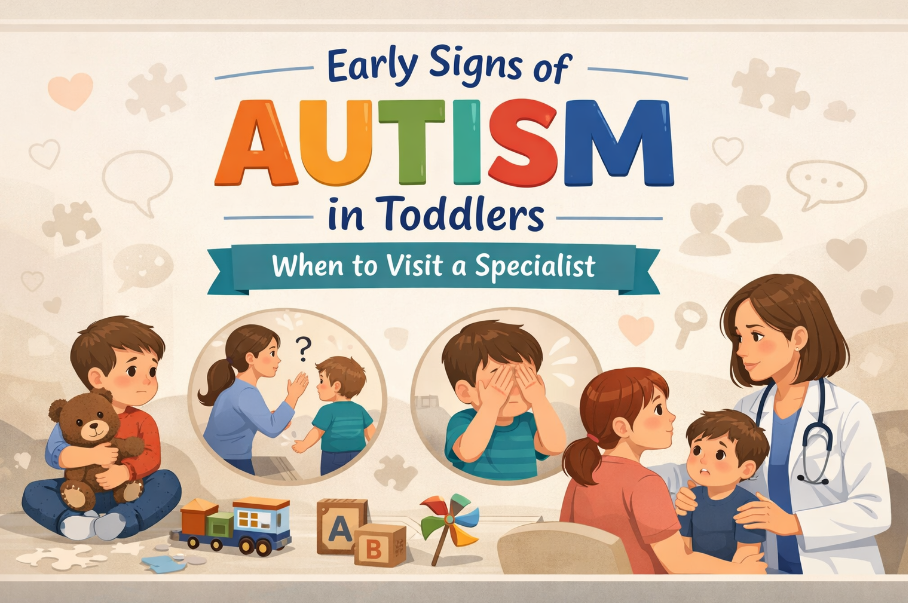
As a parent, you closely watch every milestone—your child’s first smile, first word, first step. But what if something feels different? What if your toddler doesn’t respond to their name or avoids eye contact? These small signs can raise big questions.
Autism Spectrum Disorder (ASD) appears differently in every child. Some signs are subtle, while others are more noticeable. Understanding early symptoms can help you take timely action and get your child the support they deserve.
Let’s explore the early signs of autism in toddlers, how it shows up in young and older children, and when you should consult a specialist.
What Is Autism in Young Children?
Autism affects communication, social interaction, and behavior. Signs usually appear in early childhood—often before the age of three. Every child develops at their own pace, but consistent patterns of certain behaviors may indicate autism.
Common Signs of Autism in Young Children
You may notice your child:
- Does not respond when you call their name
- Avoids or rarely makes eye contact
- Doesn’t smile back when you smile
- Gets extremely upset by certain sounds, smells, or textures
- Repeats movements like hand flapping, finger flicking, or rocking
- Speaks less than other children their age
- Shows little interest in pretend play
- Repeats words or phrases over and over
These behaviors don’t automatically mean your child is autistic—but they are important signals to observe.
Signs of Autism in Toddlers (18–24 Months)
This age range is critical for early detection. Here are important signs to watch:
Developmental Regression
Some toddlers lose skills they previously had, such as:
- Saying simple words like “mama” or “bye”
- Following simple instructions
- Drinking from a cup
- Feeding themselves
- Climbing independently
Losing skills is a major red flag and should be evaluated immediately.
Limited Gestures
Your child may:
- Not point to things they want
- Avoid waving or clapping
- Pull your hand instead of gesturing
Typical toddlers use gestures to communicate needs and interests.
Lack of Emotional Response
You may notice your child:
- Doesn’t react when someone cries
- Shows little excitement during happy moments
- Appears emotionally flat
Walking Differences
Your toddler may:
- Not walk independently
- Walk on tiptoes
- Need assistance to move around
By 18–24 months, most children walk confidently.
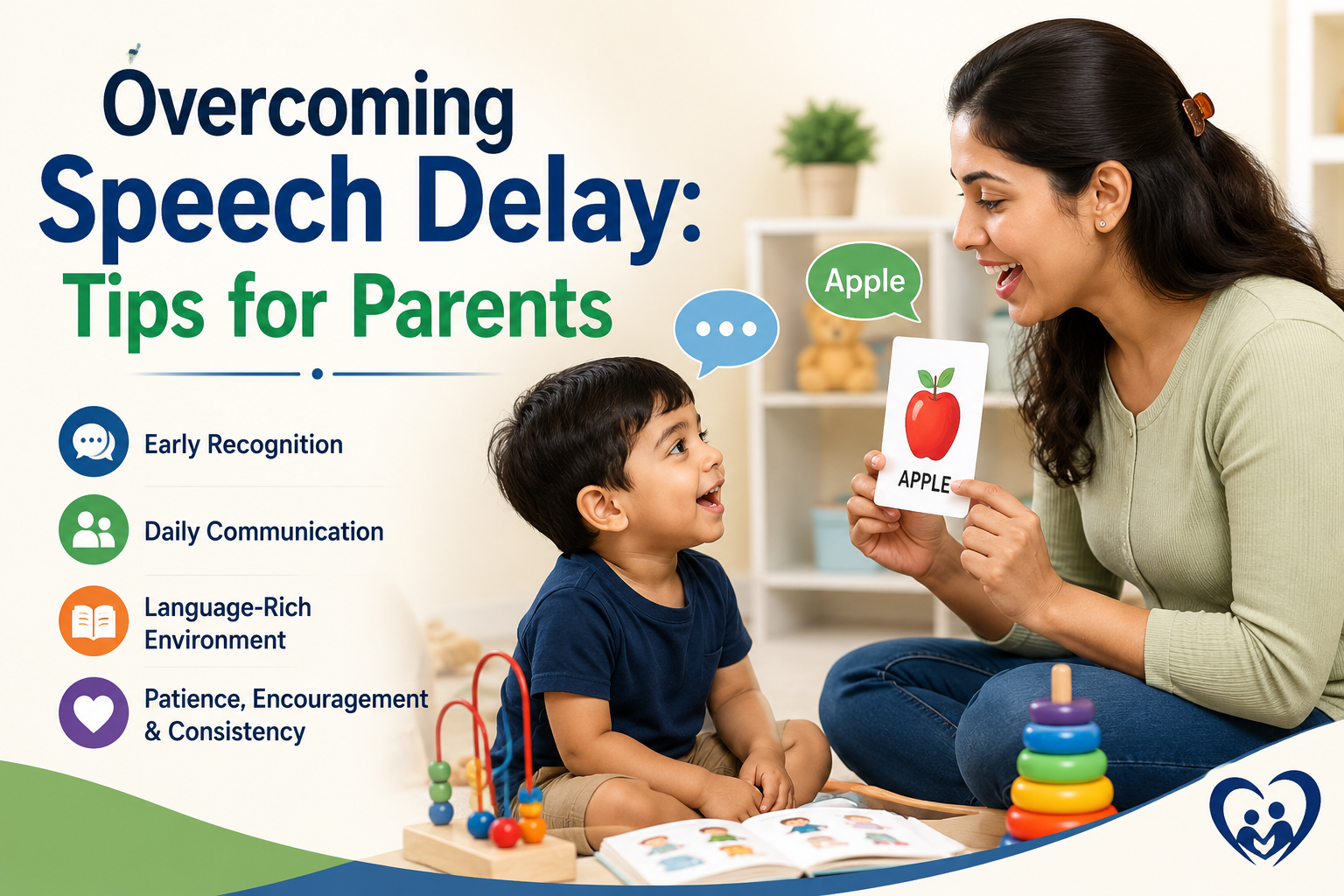
Speech Delays
Signs include:
- Not speaking at all
- Only babbling
- Using very few words (less than 100)
- Not knowing their name
Lack of Imitation
Your child may not copy:
- Waving
- Clapping
- Jumping
- Daily actions like sweeping or talking on the phone
Difficulty Following Instructions
They may not respond to simple commands like:
- “Come here”
- “Sit down”
- “Look”
Limited Social Interaction
You might see:
- No back-and-forth play
- No shared attention to toys
- Difficulty starting interactions
Key Early Signs of Autism
Joint Attention:
Joint attention is when a child looks at something and then back at you to share the experience.
For example:
- At 12 months: Looking where you point
- At 15 months: Pointing to what they want
- At 18 months: Pointing just to share interest
Autistic toddlers may:
- Ignore pointing
- Lead your hand instead
- Point only to get something—not to share joy
Language Differences in Autism
Some children:
- Label objects but don’t use words to request
- Repeat words or movie lines (echolalia)
- Speak unusually formal for their age
Others may:
- Develop speech and then lose it (regression)
When Should You Visit a Specialist?
Seek advice if:
- You feel something is not right
- Your child shows multiple signs mentioned above
- Development suddenly regresses
Who to Talk To:
- Pediatrician
- GP
- Health visitor (under 5 years)
- Speech therapist
- SENCO staff at school
Early diagnosis helps your child access therapies and support faster.
Why Early Diagnosis Matters
Early intervention leads to:
- Better communication skills
- Improved social interaction
- Higher independence
- Stronger emotional development
Therapies like ABA (Applied Behavior Analysis) work best when started early.
Conclusion
Trust your instincts—you know your child best. Not every delay means autism, but consistent patterns deserve attention.
Early autism treatment can change your child’s future. Don’t wait.
A simple screening today can make a lifelong difference.
FAQs
Early signs include poor eye contact, not responding to name, speech delay, and repetitive behaviors.
Autism can be detected as early as 12–18 months through screening.
No, but speech delay with social difficulties may need evaluation.
Through developmental screening, behavioral assessments, and specialist observation.
If your child shows multiple warning signs or loses skills, consult immediately.