Children today face various emotional and psychological challenges, and anxiety is one of the most common among them. Many parents notice their children becoming overly worried, fearful, or withdrawn but may not always recognize it as a sign of a deeper issue.
Understanding anxiety disorders in children is essential for early detection and proper care. With the right awareness and support, families can help their children overcome anxiety and lead confident, healthy lives.
What Are Anxiety Disorders in Children?
Anxiety disorders in children are conditions where a child experiences excessive fear, nervousness, or worry that interferes with daily activities. These emotions may impact school performance, friendships, and overall development.
In growing cities like Moga, where academic pressure and lifestyle changes are increasing, recognizing these conditions early is more important than ever.
Why Awareness Matters for Parents
- Parents should be aware of anxiety-related conditions because:
- Early identification improves recovery
- Children perform better academically
- Emotional well-being improves
Long-term mental health risks are reduced
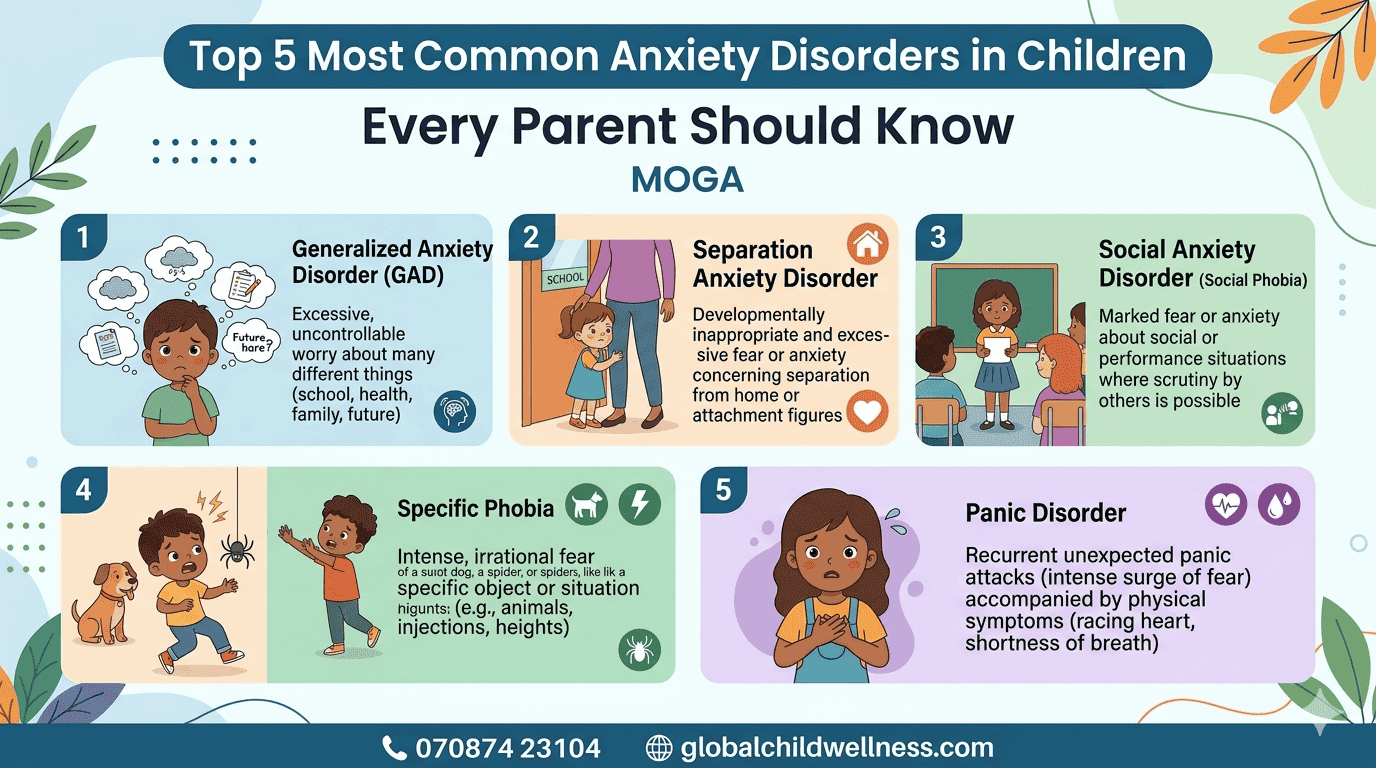
Top 5 Most Common Anxiety Disorders in Children
1 .Generalized Anxiety Disorder (GAD)
One of the most common forms of anxiety disorders in children, GAD involves constant and excessive worry about daily activities.
Symptoms:
- Continuous worrying
- Difficulty concentrating
- Fatigue and irritability
Support Tips:
Parents in Moga can help by maintaining a structured routine and encouraging open conversations.
2. Separation Anxiety Disorder
This condition is common in younger children who feel extreme distress when separated from parents.
Symptoms:
- Fear of being alone
- Refusal to attend school
- Clingy behavior
Support Tips:
Gradual independence and reassurance can help children cope better.
3. Social Anxiety Disorder
Children with this disorder fear social interactions and being judged.
Symptoms:
- Avoiding social events
- Fear of speaking in public
- Low confidence
Support Tips:
Encourage small social interactions within safe environments .
4. Specific Phobias
These involve intense fear of certain objects or situations like darkness, animals, or heights.
Symptoms:
- Immediate fear reaction
- Avoidance behavior
- Physical discomfort
Support Tips:
Parents ishould introduce gradual exposure and reassurance.
5. Panic Disorder
Panic disorder involves sudden and intense episodes of fear.
Symptoms:
- Rapid heartbeat
- Shortness of breath
- Dizziness
Support Tips:
Seek professional support if symptoms persist.
Common Signs Parents Should Watch
parents should look for:
- Excessive worrying
- Sleep issues
- Avoidance of activities
- Physical complaints (headaches, stomach aches)
- Irritability
Causes of Anxiety in Children
Several factors contribute to anxiety disorders in children, including:
- Genetics
- Academic pressure
- Family environment
- Traumatic experiences
With increasing competition and lifestyle changes in Moga, these factors can become more noticeable.
Treatment Options in Moga
Families have access to various support options:
Therapy
- Cognitive Behavioral Therapy (CBT)
- Counseling
Lifestyle Support
- Healthy routines
- Physical activity
- Balanced diet
Parental Involvement
- Open communication
- Emotional support
How Parents Can Help
Parents play a vital role:
- Listen patiently
- Avoid dismissing fears
- Encourage positive thinking
- Create a stress-free home environment
Importance of Early Intervention
Early support for anxiety disorders in children can:
- Improve confidence
- Enhance social skills
- Prevent long-term mental health issues
For families, timely action can make a big difference.
Conclusion
Anxiety is a common but manageable condition. Understanding the top 5 most common anxiety disorders in children helps parents take the right steps early.