
Speech and communication are essential parts of a child’s development. From saying their first words to forming complete sentences, every milestone plays a crucial role in shaping their confidence and social skills. However, many children face challenges in speaking clearly or expressing themselves effectively.
Understanding speech problems in children is important for parents, as early identification and intervention can make a significant difference. With the right support and professional guidance, children can overcome these challenges and develop strong communication skills.
In this blog, we will explore the most common speech problems in children and how therapy can help, along with signs, causes, and effective solutions.
What Are Speech Problems in Children?
Speech problems in children refer to difficulties in producing sounds correctly, speaking fluently, or using language effectively. These issues may affect how a child communicates with others and can impact their academic and social development.
Speech problems can vary from mild pronunciation issues to more complex communication disorders. Identifying these problems early is key to successful treatment.
Why Early Detection Matters
Recognizing speech problems in children at an early stage can:
- Improve communication skills
- Boost self-confidence
- Enhance academic performance
- Prevent social isolation
- Reduce long-term developmental issues
Parents play a vital role in observing early signs and seeking professional help when needed.
Common Speech Problems in Children
- Articulation Disorders
Articulation disorders occur when a child has difficulty pronouncing certain sounds correctly.
Examples:
- Saying “wabbit” instead of “rabbit”
- Omitting sounds in words
Signs
- Speech is unclear or difficult to understand
- Frequent mispronunciation
How Therapy Helps:
Speech therapy focuses on teaching correct sound production through repetition and guided practice.
2. Fluency Disorders (Stuttering)
Fluency disorders affect the flow of speech. The most common type is stuttering.
Signs:
- Repeating sounds or words
- Prolonging sounds
- Pauses while speaking
How Therapy Helps:
Therapists use techniques to improve speech flow, breathing control, and confidence.
3.Language Disorders
Language disorders involve difficulty understanding or using words correctly.
Types:
- Receptive (understanding language)
- Expressive (speaking or expressing thoughts)
Signs
- Limited vocabulary
- Difficulty forming sentences
- Trouble following instructions
How Therapy Helps:
Speech therapy improves vocabulary, sentence structure, and comprehension skills.
4. Voice Disorders
Voice disorders occur when a child’s voice sounds unusual in pitch, tone, or volume.
Signs:
- Hoarse or strained voice
- Too loud or too soft speech
How Therapy Helps:
Therapists teach proper voice use and vocal hygiene techniques.
5 . Apraxia of Speech
This is a motor speech disorder where the brain struggles to coordinate speech movements.
Signs:
- Difficulty forming words
- Inconsistent speech errors
- Delayed speech development
How Therapy Helps:
Speech therapy uses structured exercises to improve coordination and clarity.
Signs Your Child May Have Speech Problems
Parents should watch for these common signs of speech problems in children:
- Delayed speech milestones
- Difficulty pronouncing words
- Limited vocabulary for age
- Trouble understanding instructions
- Avoiding speaking situations
- Frustration while communicating
If these signs persist, it’s important to seek professional guidance.
Causes of Speech Problems in Children
Several factors can contribute to speech problems in children, including:
- Hearing issues
- Developmental delays
- Neurological conditions
- Genetic factors
- Lack of communication exposure
- Oral-motor difficulties
Understanding the cause helps in choosing the right treatment approach.
How Speech Therapy Can Help
Speech therapy is one of the most effective solutions for managing speech problems in children. It involves structured sessions designed to improve communication skills.
Key Benefits:
- Improves pronunciation and clarity
- Enhances vocabulary and language skills
- Boosts confidence in speaking
- Helps with social interaction
- Encourages better academic performance
Techniques Used in Speech Therapy
Speech therapists use various techniques to address speech problems in children:
- Sound repetition exercises
- Language-building activities
- Interactive games and storytelling
- Breathing and fluency exercises
- Visual and auditory aids
These techniques are tailored to the child’s specific needs.
How Parents Can Support at Home
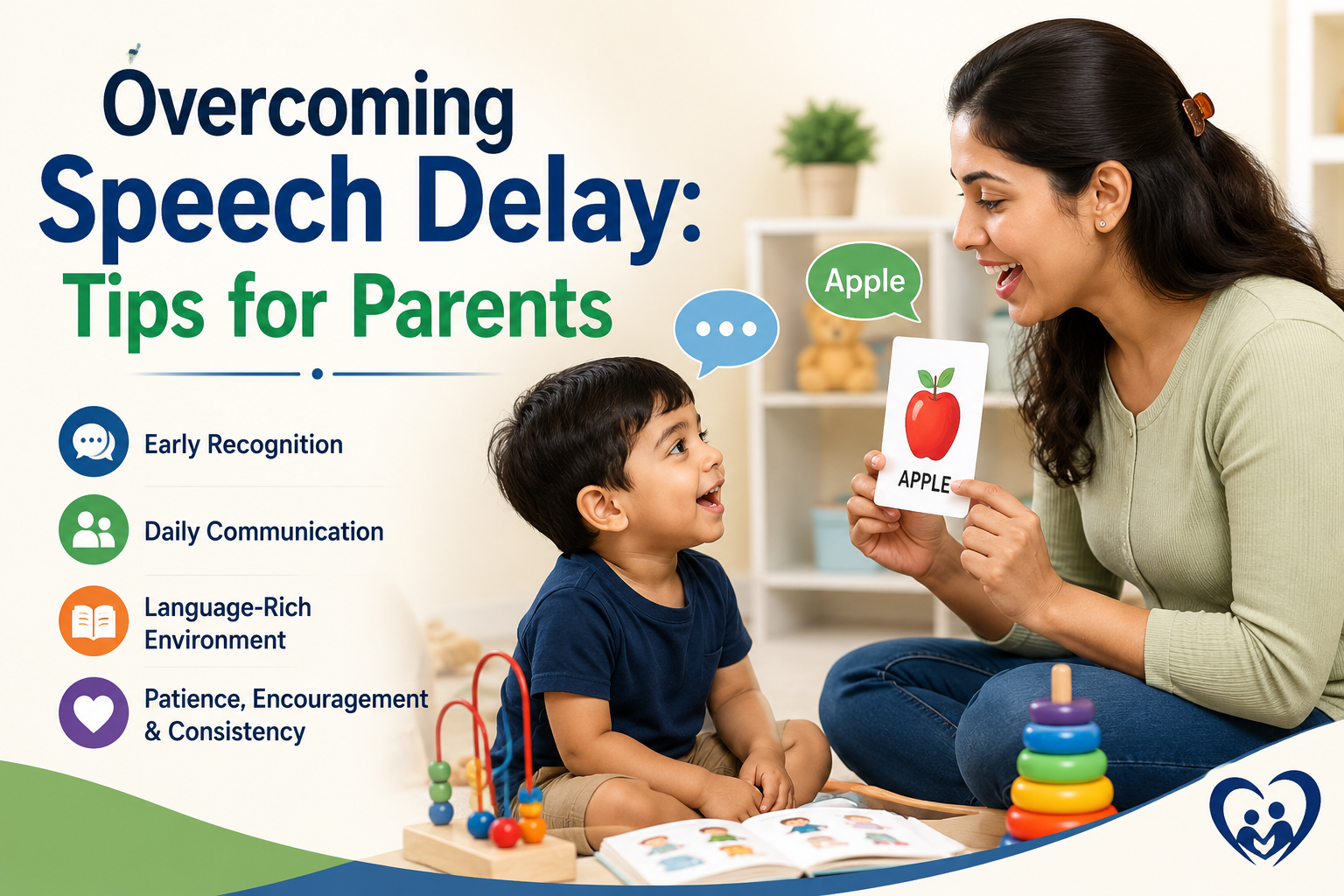
Parents play a crucial role in overcoming speech problems in children. Here are some simple tips:
- Talk to your child regularly
- Read books together
- Encourage storytelling
- Be patient and supportive
- Avoid correcting harshly
- Practice therapy exercises at home
Consistency and encouragement make a big difference.
Importance of Early Intervention
Early treatment of speech problems in children can:
- Prevent long-term communication issues
- Improve social and emotional development
- Enhance learning abilities
- Build self-confidence
The earlier the intervention, the better the outcomes.
When to Consult a Speech Therapist
You should consider consulting a professional if:
- Your child is not speaking as per age milestones
- Speech is unclear after age 3–4
- There is stuttering or hesitation
- Your child struggles to understand language
Early consultation ensures timely support.
Conclusion
Speech plays a vital role in a child’s overall development. Understanding common speech problems in children and how therapy can help allows parents to take the right steps at the right time.
With proper guidance, consistent effort, and professional speech therapy, children can overcome communication challenges and thrive in every aspect of life.
Remember, every child develops at their own pace—but with the right support, they can reach their full potential.