Communication is one of the most important skills a child develops in their early years. From expressing needs to building relationships, speech plays a vital role in shaping a child’s confidence and success. However, many parents hesitate to seek help when they notice speech-related challenges due to common misconceptions.
There are several myths surrounding speech therapy for children, which often delay early intervention. These myths can create confusion, fear, and even stigma, preventing children from getting the support they truly need.
In this detailed guide, we will explore and bust the top myths about speech therapy for children, helping parents understand the facts and make informed decisions for their child’s development.
What is Speech Therapy for Children?
Speech therapy for children is a professional service designed to help kids improve their communication skills. It addresses a wide range of issues, including speech delays, pronunciation difficulties, stuttering, language disorders, and social communication challenges.
A trained speech therapist uses structured techniques, play-based learning, and personalized strategies to support each child’s unique needs. The goal of speech therapy for children is to help them communicate clearly, confidently, and effectively.
Why Do Myths About Speech Therapy Exist?
Misconceptions about speech therapy for children often arise from lack of awareness, outdated beliefs, or misinformation. Some parents may assume that speech problems will resolve on their own, while others may not fully understand how therapy works.
These myths can lead to:
- Delayed diagnosis
- Missed early intervention opportunities
- Increased communication challenges
- Reduced confidence in children
By understanding the truth about speech therapy for children, parents can take timely action and ensure better outcomes.
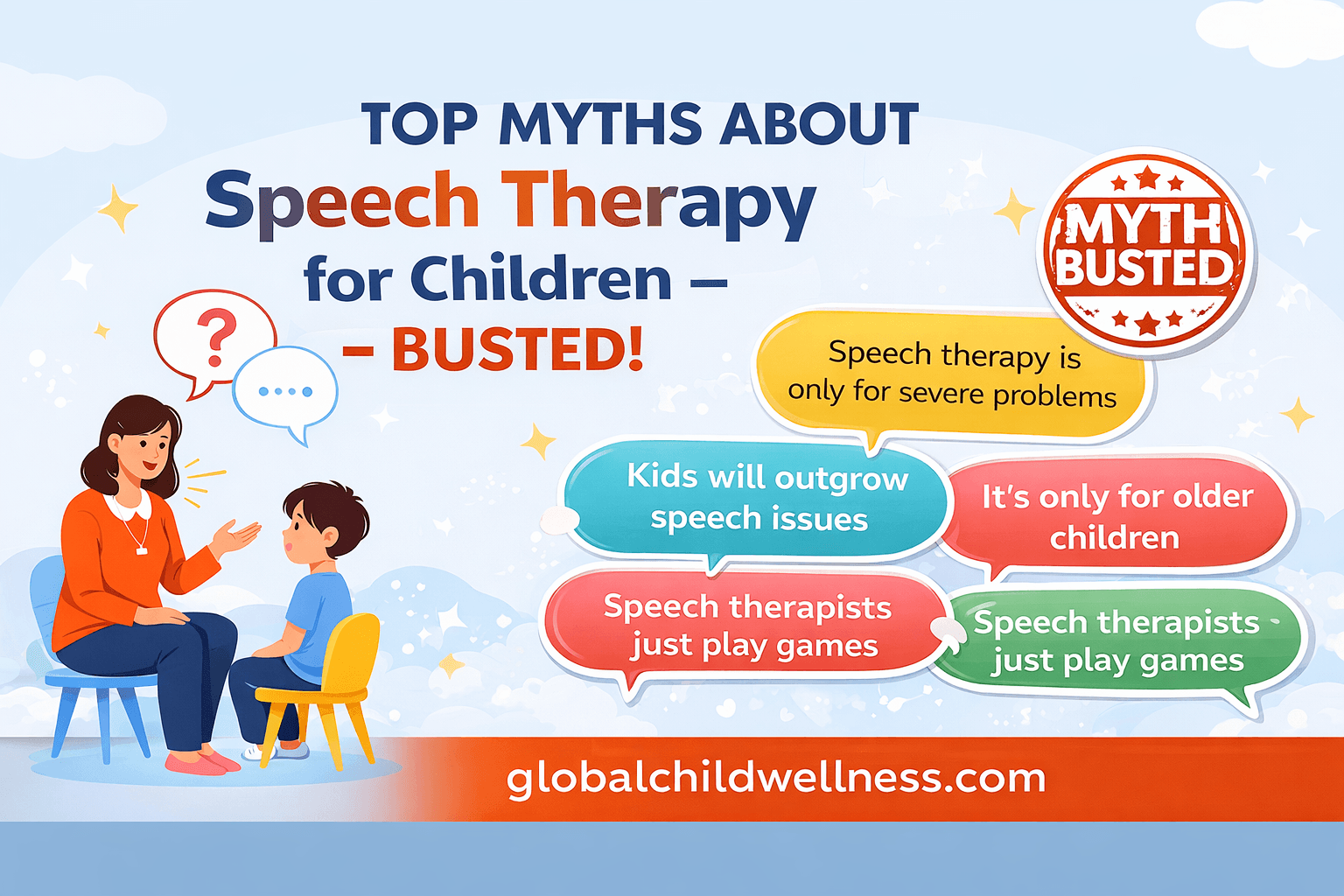
Top Myths About Speech Therapy for Children – Busted!
❌ Myth 1: “My Child Will Outgrow Speech Problems”
Truth:
While some children may naturally improve, many speech issues require professional support. Waiting too long can make the problem harder to correct.
Early intervention through speech therapy for children helps address issues before they become long-term challenges. The earlier the therapy begins, the better the results.
❌ Myth 2: “Speech Therapy is Only for Severe Cases”
Truth:
Speech therapy is not limited to severe conditions. Even mild speech delays or pronunciation issues can benefit from professional guidance.
Speech therapy for children supports a wide range of communication needs, from minor articulation problems to more complex disorders.
❌ Myth 3: “Only Toddlers Need Speech Therapy”
Truth:
Children of all ages can benefit from speech therapy. School-age children may need help with language skills, fluency, or social communication.
Speech therapy for children is tailored to different age groups, ensuring that every child receives appropriate support.
❌ Myth 4: “Speech Therapy Takes Years to Show Results”
Truth:
The duration of therapy depends on the child’s condition and consistency. Many children show noticeable improvement within a few months.
With regular sessions and practice, speech therapy for children can deliver effective and timely results.
❌Myth 5: “Parents Cannot Contribute to Therapy”
Truth:
Parents play a crucial role in their child’s progress. Practicing exercises at home reinforces what is learned during therapy sessions.
Active involvement makes speech therapy for children more successful and sustainable.
❌Myth 6: “Speech Problems Mean Low Intelligence”
Truth:
Speech difficulties are not related to intelligence. Many children with speech issues are bright and capable but need help expressing themselves.
Speech therapy for children helps unlock their true potential by improving communication skills.
❌Myth 7: “Boys Naturally Speak Late”
Truth:
While some variation exists, significant delays should not be ignored. Assuming it’s normal can delay necessary intervention.
Seeking speech therapy for children ensures timely support and prevents further complications.
❌Myth 8: “Speech Therapy is Just Talking Practice”
Truth:
Speech therapy involves structured techniques, scientific methods, and personalized plans. It goes beyond simple talking practice.
Speech therapy for children includes articulation exercises, language development activities, and cognitive strategies.
❌Myth 9: “Therapy is Boring for Children”
Truth:
Modern speech therapy sessions are interactive and fun. Therapists use games, storytelling, and engaging activities to keep children motivated.
This makes speech therapy for children enjoyable and effective.
❌Myth 10: “Online Speech Therapy is Not Effective”
Truth:
Online sessions can be highly effective when conducted properly. Many therapists use digital tools to enhance learning.
Today, speech therapy for children is accessible both online and offline, offering flexibility for families.
Signs Your Child May Need Speech Therapy
Recognizing early signs is crucial. Look for:
- Delayed speech development
- Difficulty pronouncing words
- Limited vocabulary
- Trouble forming sentences
- Stuttering or hesitation
- Difficulty understanding instructions
If these signs persist, speech therapy for children can provide the necessary support.
Causes of Speech Problems in Children
Several factors can lead to speech issues, including:
- Hearing problems
- Developmental delays
- Neurological conditions
- Genetic factors
- Lack of communication exposure
Understanding these causes helps professionals design effective speech therapy for children programs.
Benefits of Speech Therapy for Children
There are many advantages of speech therapy for children, such as:
- Improved communication skills
- Better pronunciation and clarity
- Increased confidence
- Enhanced academic performance
- Stronger social interactions
Techniques Used in Speech Therapy
Speech therapists use various methods to support children:
- Articulation exercises
- Language-building activities
- Play-based learning
- Fluency training
- Visual and auditory aids
These techniques make speech therapy for children engaging and result-oriented.
Role of Parents in Speech Therapy
Parents are essential partners in the therapy process. They can:
- Practice exercises at home
- Encourage daily conversations
- Read books with their child
- Provide positive reinforcement
Consistent support enhances the effectiveness of speech therapy for children.
Importance of Early Intervention
Early intervention is key to success. Starting speech therapy for children early can:
- Prevent long-term communication issues
- Improve social development
- Enhance learning abilities
- Build confidence
Conclusion
There are many misconceptions about speech therapy for children, but understanding the truth helps parents make the right decisions.
Speech therapy is not just for severe cases—it is a powerful tool that supports communication, confidence, and overall development. By busting these myths, parents can take proactive steps to ensure their child receives the help they need.
If you notice any signs of speech delay, don’t wait. Early intervention through speech therapy for children can make a lifelong difference.