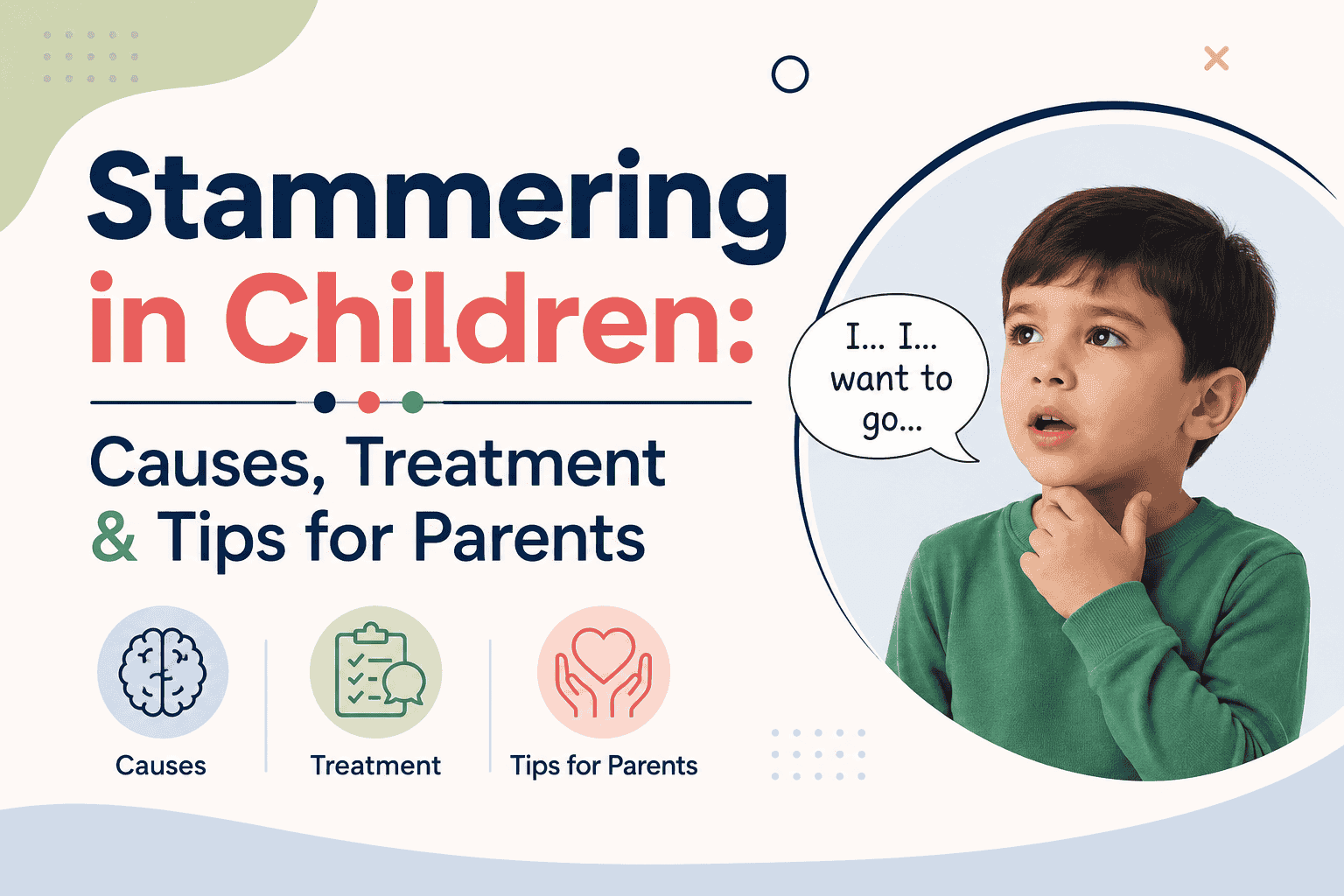
Stammering in Children: Causes, Treatment & Tips for Parents
Stammering, also known as stuttering, is one of the most common speech disorders seen in young children. Many parents become concerned when their child repeats words, hesitates while speaking, or struggles to complete a sentence. While some children outgrow stammering naturally, others may require professional support to improve their speech fluency and confidence.
The good news is that with early identification and the right intervention, most children can make significant progress. This guide explains the causes of stammering, its symptoms, treatment options, and practical tips that parents can use at home.
What Is Stammering?
Stammering is a speech disorder that affects the natural flow of speech. A child knows exactly what they want to say but finds it difficult to express their thoughts smoothly. They may repeat sounds or words, prolong certain sounds, or experience blocks where no sound comes out.
For example, a child might say:
- “M-m-m-mom.”
- “Can…can…can I play?”
- “I w w want water.”
Stammering often begins between the ages of 2 and 5 years, when language development is rapidly expanding.
What Causes Stammering in Children?
There is no single cause of stammering. Instead, several factors may contribute to its development.
1. Family History
Children with a family history of stammering are more likely to develop the condition. Genetics can play an important role in speech fluency.
2. Rapid Language Development
Young children often think faster than they can speak. As they learn new vocabulary and sentence structures, temporary speech disruptions may occur.
3. Brain Development
Research suggests that children who stammer may process speech and language differently than children with typical speech development.
4. Emotional Factors
Stress, excitement, anxiety, or changes in routine do not cause stammering, but they can make it more noticeable.
5. Developmental Differences
Children with developmental delays, speech-language disorders, or neurodevelopmental conditions may be more likely to experience stammering.
Signs and Symptoms of Stammering
Parents should watch for the following signs:
- Repeating sounds or syllables
- Repeating whole words
- Prolonging sounds
- Sudden pauses or blocks while speaking
- Facial tension during speech
- Blinking or head movements while trying to talk
- Avoiding speaking situations
- Becoming frustrated while talking
If these symptoms continue for several months or begin affecting your child’s confidence, professional evaluation is recommended.
When Should Parents Seek Help?
Many children experience temporary speech disfluencies during language development. However, parents should consult a speech therapist if:
- Stammering lasts longer than six months.
- Speech becomes increasingly difficult.
- Your child avoids speaking.
- They become upset or embarrassed while talking.
- There is a family history of stammering.
- The child shows physical tension while speaking.
Early intervention leads to better outcomes and helps prevent emotional and social difficulties.
How Is Stammering Diagnosed?
A qualified speech-language pathologist (speech therapist) evaluates:
- Speech fluency
- Language development
- Communication skills
- Speech patterns
- Family history
- Child’s emotional response to speaking
The assessment helps determine the severity of stammering and the most appropriate treatment plan.
Effective Treatment for Stammering
Every child is unique, so treatment is personalized according to their age and needs.
Speech Therapy
Speech therapy is the most effective treatment for childhood stammering. Therapy focuses on helping children:
- Improve speech fluency
- Reduce speech blocks
- Build communication confidence
- Learn smooth speech techniques
- Develop positive speaking habits
Parents searching for Speech therapy for child in Malout should look for experienced professionals who provide individualized treatment plans based on each child’s specific needs.
Parent Training
Parents play a major role in improving speech fluency. Therapists often guide parents on creating a calm and supportive communication environment at home.
Confidence Building
Many children who stammer lose confidence over time. Therapy includes activities that encourage children to speak comfortably in different situations without fear of making mistakes.
Tips for Parents to Support Their Child
Listen Patiently
Allow your child to complete their sentences without interrupting or finishing words for them.
Speak Slowly
Children naturally imitate adult speech patterns. Speaking calmly and slowly encourages smoother communication.
Maintain Eye Contact
Focus on your child’s message rather than their speech difficulty. This helps them feel accepted and understood.
Avoid Correcting Constantly
Avoid saying things like:
- “Slow down.”
- “Take a deep breath.”
- “Say it again.”
Although well-intentioned, these comments can increase pressure.
Encourage Conversations
Create opportunities for enjoyable conversations during meals, bedtime, or family activities.
Praise Communication
Praise your child for expressing ideas rather than speaking perfectly.
Can Stammering Be Prevented?
There is no guaranteed way to prevent stammering because many causes are genetic or developmental. However, early speech therapy and a supportive home environment can greatly reduce its impact on communication and confidence.
How Speech Therapy Helps Children Thrive
Professional speech therapy goes beyond improving speech. It also helps children:
- Communicate confidently
- Participate in school activities
- Make friends more easily
- Reduce anxiety related to speaking
- Improve overall quality of life
If your child struggles with stammering, consulting an experienced speech therapist early can make a significant difference.
Supporting Emotional Well-Being
Children who stammer may sometimes experience frustration, low self-esteem, or social anxiety. Emotional support is just as important as speech therapy. Working with the Best psychologist in Malout alongside a speech therapist can help children build confidence, develop coping strategies, and overcome any emotional challenges associated with communication difficulties.
Why Choose Global Child Wellness?
At Global Child Wellness, we understand that every child’s communication journey is unique. Our multidisciplinary team provides comprehensive assessments and evidence-based interventions to help children overcome speech challenges and communicate with confidence.
Our experienced speech therapist works closely with families to develop personalized therapy plans that focus on improving fluency, language skills, and overall communication. Whether you’re looking for Speech therapy for child in Malout or guidance from the Best psychologist in Malout, our team is committed to supporting your child’s speech, emotional, and developmental growth in a caring and child-friendly environment.
Conclusion
Stammering can be challenging for both children and parents, but it is highly manageable with early support and professional intervention. Patience, encouragement, and consistent speech therapy can help children become confident communicators.
If you notice persistent stammering or your child is becoming anxious about speaking, don’t wait. Early assessment and therapy can have a lasting positive impact on your child’s communication skills and self-confidence.