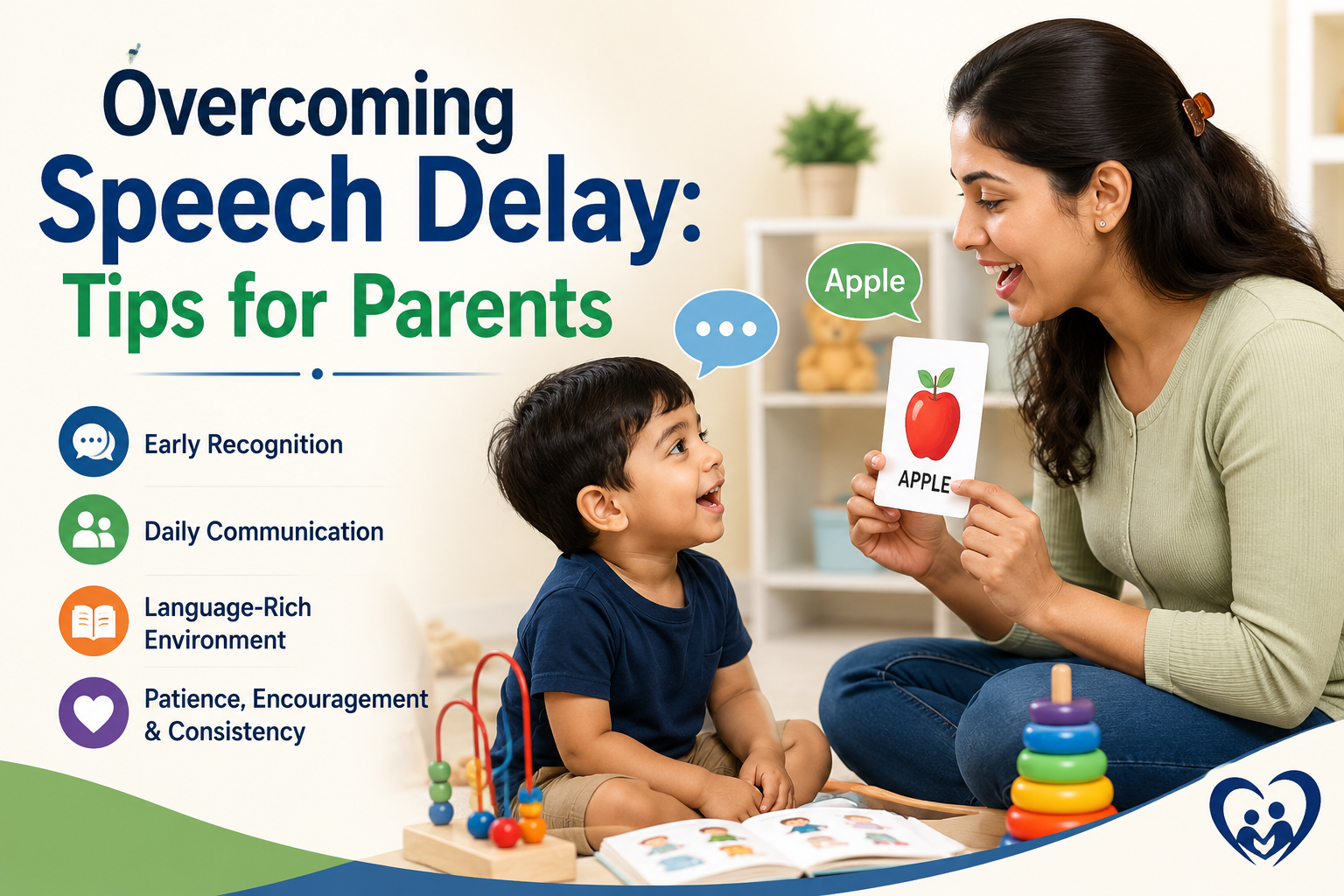
Every child develops at their own pace, but hearing your child speak their first words is a milestone every parent eagerly awaits. If your child is not talking as expected, it’s natural to feel concerned. While some children are simply “late talkers,” others may have a speech or language delay that requires early support. Seeking professional speech therapy in Ludhiana can help identify the underlying cause and provide personalized intervention to improve your child’s communication skills.
The good news is that with timely intervention, consistent practice, and the right guidance, many children make remarkable progress. In this blog, we’ll explore what speech delay is, common causes, warning signs, and practical tips parents can use to support their child’s communication skills.
What Is Speech Delay?
Speech delay occurs when a child develops speech and language skills more slowly than expected for their age. A child with speech delay may have difficulty saying words, forming sentences, or communicating clearly.
It’s important to understand that speech refers to how words are spoken, while language refers to understanding and using words to communicate ideas, feelings, and needs. Some children may have delays in speech, language, or both.
Common Signs of Speech Delay
Recognizing the signs early can help your child receive the support they need.
Some common signs include:
- Not babbling by 12 months
- Not saying simple words like “mama” or “dada” by 18 months
- Limited vocabulary compared to children of the same age
- Difficulty combining two or more words by age 2
- Trouble following simple instructions
- Difficulty expressing wants and needs
- Speech that is difficult for others to understand
- Frustration due to communication challenges
If you notice several of these signs, it’s a good idea to consult a speech-language therapist.
What Causes Speech Delay?
Speech delay can happen for many reasons, including:
Hearing Problems
Children who cannot hear sounds clearly may have difficulty learning to speak.
Developmental Disorders
Conditions such as autism spectrum disorder (ASD), ADHD, or developmental delays can affect communication skills.
Oral-Motor Difficulties
Weakness or poor coordination of the lips, tongue, or jaw can make speech difficult.
Neurological Conditions
Some neurological disorders may impact speech and language development.
Environmental Factors
Limited interaction, reduced conversation, or excessive screen time may slow language development in some children.
In many cases, no single cause is identified, but early evaluation is still important.
Why Early Intervention Matters
The first few years of life are critical for brain development. During this time, children learn language rapidly.
Early speech therapy can help children:
- Improve communication skills
- Build confidence
- Develop better social interactions
- Prepare for school
- Reduce future learning difficulties
The earlier support begins, the better the outcomes are likely to be.
Practical Tips for Parents to Encourage Speech Development
Parents play a vital role in helping children develop communication skills. Here are some simple yet effective strategies you can use every day.
1. Talk to Your Child Frequently
Describe your daily activities as you go about your routine.
For example:
- “Let’s put on your shoes.”
- “We’re cutting an apple.”
- “Look at the red car.”
Hearing language throughout the day helps children build vocabulary naturally.
2. Read Books Together
Reading is one of the best ways to encourage speech and language.
Choose colorful picture books and:
- Point to pictures
- Name objects
- Ask simple questions
- Encourage your child to repeat words
Even just 15–20 minutes of reading each day can make a significant difference.
3. Encourage Turn-Taking
Communication is a two-way process.
Give your child time to respond instead of answering for them. Pause after asking a question and wait patiently.
Even gestures, sounds, or single words are valuable attempts at communication.
4. Reduce Screen Time
Excessive screen exposure can reduce opportunities for real-life conversations.
Instead of passive screen time, encourage:
- Outdoor play
- Storytelling
- Singing songs
- Family conversations
- Interactive games
Face-to-face communication is much more beneficial for language development.
5. Expand What Your Child Says
If your child says:
“Ball.”
You can respond:
“Yes! That’s a big red ball.”
This teaches new words while encouraging longer sentences.
6. Use Everyday Activities as Learning Opportunities
Simple routines provide excellent chances to practice language.
During meals:
- Name foods
- Count fruits
- Describe colors
During bath time:
- Name body parts
- Talk about water, bubbles, and toys
Learning becomes fun when it’s part of daily life.
7. Sing Songs and Rhymes
Music naturally supports speech development.
Songs with actions help children:
- Learn new vocabulary
- Improve memory
- Practice pronunciation
- Develop listening skills
Nursery rhymes are especially effective for younger children.
8. Encourage Play-Based Learning
Children learn best through play.
Activities that encourage communication include:
- Building blocks
- Pretend cooking
- Doll play
- Toy animals
- Puzzle games
Join your child during play and keep conversations simple and engaging.
9. Avoid Correcting Every Mistake
Instead of saying,
“No, that’s wrong.”
Model the correct pronunciation naturally.
For example:
Child: “Tat.”
Parent: “Yes, it’s a cat!”
Positive reinforcement encourages confidence.
10. Celebrate Small Progress
Every new sound, word, or sentence is an achievement.
Praise your child’s efforts with encouragement like:
- “Great talking!”
- “I love how you said that!”
- “You did an amazing job!”
Positive reinforcement motivates children to keep communicating.
When Should You Seek Professional Help?
Consider consulting a speech-language therapist if your child:
- Has very limited speech after age 2
- Stops using words they previously knew
- Has difficulty understanding simple instructions
- Becomes frustrated because they cannot communicate
- Is difficult to understand after age 3
- Shows little interest in communicating with others
A professional assessment can identify the cause and recommend the most appropriate treatment plan.
How Speech Therapy Can Help
Speech therapy is personalized to each child’s needs. Sessions may include:
- Speech sound practice
- Vocabulary building
- Language development activities
- Oral-motor exercises (when needed)
- Listening and comprehension tasks
- Parent coaching for home practice
Therapists also provide strategies parents can use daily to reinforce progress outside therapy sessions.
Common Myths About Speech Delay
Myth 1: “My child will outgrow it.”
Some children catch up naturally, but many benefit from early evaluation and intervention. Waiting too long can delay progress.
Myth 2: “Boys always talk late.”
While some boys may develop language slightly later than girls, persistent speech delays should never be ignored.
Myth 3: “Using two languages causes speech delay.”
Research shows that bilingualism does not cause speech delays. Children can successfully learn more than one language with appropriate exposure.
Frequently Asked Questions (FAQs)
Can speech delay be treated?
Yes. Many children improve significantly with early intervention, speech therapy, and consistent support at home.
At what age should I worry about speech delay?
If your child is not meeting expected speech and language milestones or you have concerns, it’s best to seek an evaluation as early as possible.
Can parents help improve speech at home?
Absolutely. Talking, reading, singing, and engaging in interactive play every day can greatly support language development.
How long does speech therapy take?
The duration varies depending on the child’s needs, age, and the underlying cause of the speech delay. Some children make rapid progress, while others may need longer-term support.
Is speech delay always linked to autism?
No. While speech delay can be a sign of autism, many children with speech delays do not have autism. A professional evaluation is necessary to determine the cause.
Final Thoughts
Speech delay can feel overwhelming for parents, but it is important to remember that every child has the potential to grow with the right support. Early recognition, daily communication, and professional guidance can make a significant difference in your child’s language development.
If you notice persistent speech or language difficulties, don’t wait to seek help. Early intervention not only improves communication skills but also boosts confidence, social interaction, and readiness for school. At Global Child Wellness Centre in Ludhiana, our experienced team provides personalized care to help children overcome speech and language challenges through evidence-based therapy. With patience, encouragement, and consistent practice, your child can build the skills they need to express themselves with confidence.