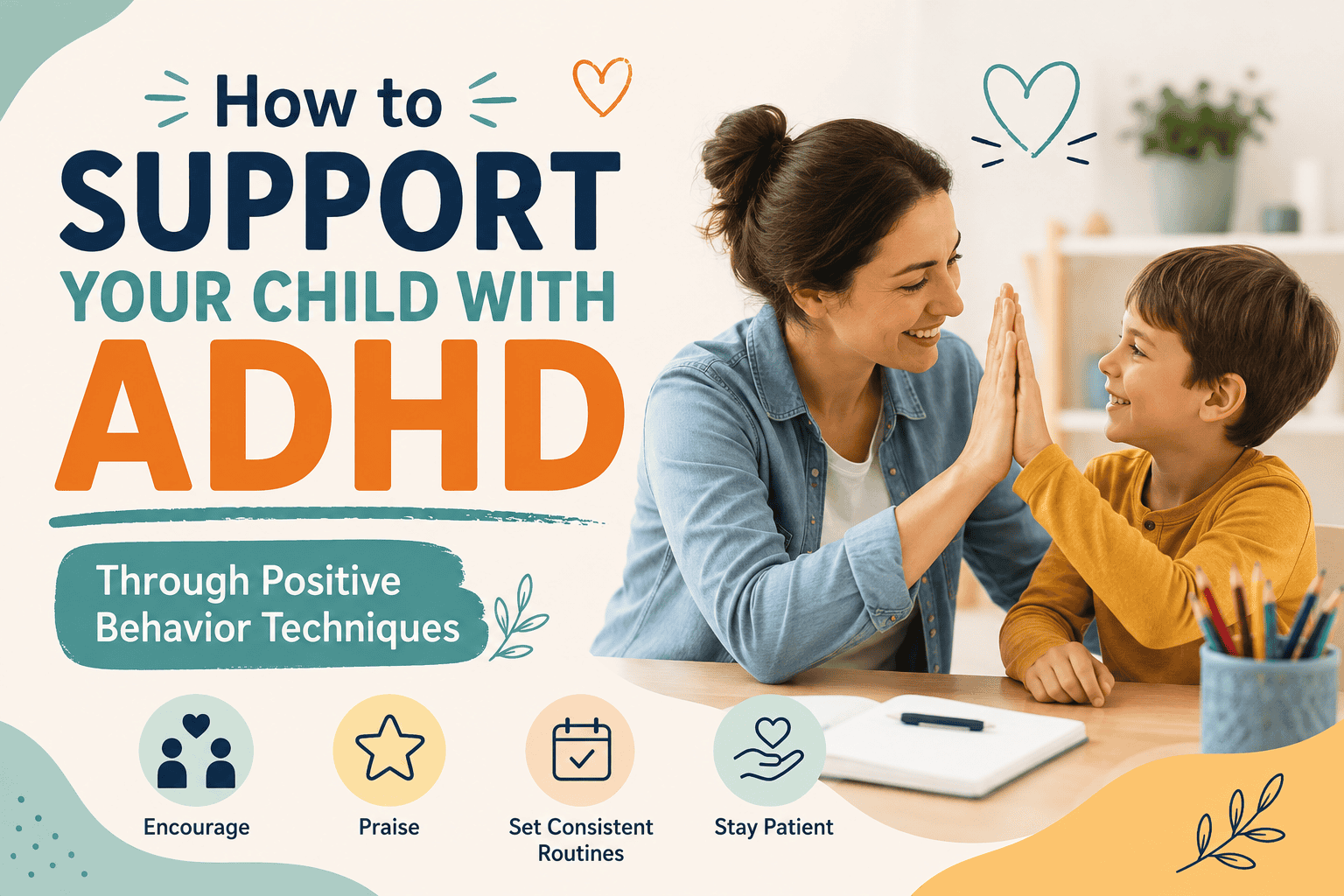
Parenting a child with ADHD (Attention Deficit Hyperactivity Disorder) can sometimes feel challenging. Your child may have trouble paying attention, sitting still, following instructions, or controlling their impulses. While these behaviors can be frustrating, it’s important to remember that ADHD is not a result of poor parenting or bad behavior. It is a neurodevelopmental condition that requires understanding, patience, and the right support.
The good news is that small, positive changes in your parenting approach can make a big difference. By using positive behavior techniques, you can help your child build confidence, improve daily routines, and develop better self-control.
Let’s explore some simple and practical strategies that can support your child every day.
1. Praise Good Behavior Immediately
Children with ADHD respond well to positive reinforcement. Whenever your child does something good, appreciate them right away.
For example:
- “Great job finishing your homework on time!”
- “I’m proud of you for putting your toys away.”
Specific and immediate praise encourages children to repeat positive behaviors.
2. Give Simple and Clear Instructions
Children with ADHD may struggle to remember multiple instructions at once.
Instead of saying:
“Put your bag away, wash your hands, change your clothes, and start your homework.”
Try breaking it down:
- Put your bag away.
- Wash your hands.
- Now start your homework.
Giving one instruction at a time makes it easier for your child to stay focused.
3. Create a Consistent Daily Routine
A predictable routine helps children with ADHD feel more secure and organized.
Your daily schedule can include:
- Wake-up time
- School hours
- Homework time
- Playtime
- Screen time
- Bedtime
Following the same routine every day reduces confusion and helps children know what to expect.
4. Break Big Tasks into Smaller Steps
Large tasks can feel overwhelming for children with ADHD.
Instead of asking them to complete everything at once, divide the task into smaller parts.
For example:
- Study for 15 minutes.
- Take a 5-minute break.
- Continue with the next activity.
Small goals make tasks feel more achievable and help improve concentration.
5. Use a Reward System
Rewards can motivate children to develop positive habits.
Simple reward ideas include:
- Star charts
- Stickers
- Extra playtime
- Choosing a favorite family game
- Reading a favorite bedtime story
The reward doesn’t have to be expensive. Consistent encouragement is often more effective than costly gifts.
6. Stay Calm During Difficult Moments
Every child makes mistakes, and children with ADHD are no exception.
Instead of reacting with anger, respond calmly.
For example:
“It’s okay. Let’s try again together.”
A calm response helps children learn from their mistakes without feeling discouraged.
7. Limit Screen Time
Too much time spent on mobile phones, tablets, television, or video games can make it harder for some children to stay focused.
Try to:
- Set daily screen time limits.
- Avoid screens before bedtime.
- Encourage outdoor play and family activities.
Balancing screen time with physical activities supports healthy development.
8. Encourage Physical Activity
Regular exercise helps children use their energy in a positive way and can improve focus.
Activities such as:
- Cycling
- Running
- Swimming
- Dancing
- Yoga
can improve attention, reduce restlessness, and support emotional well-being.
9. Avoid Comparing Your Child with Others
Every child learns and grows at their own pace.
Avoid saying:
- “Look how well your sibling behaves.”
- “Other children can do this easily.”
Instead, say:
“I’m proud of the effort you’re making.”
Focusing on your child’s progress builds confidence and encourages continued improvement.
10. Work Together with Professionals
If ADHD symptoms are affecting your child’s learning, behavior, or relationships, don’t hesitate to seek professional support.
A team that may help includes:
- Child Psychologist
- Child Psychiatrist
- Behavioral Therapist
- Occupational Therapist
- Special Educator
Early intervention and appropriate therapy can significantly improve your child’s development and quality of life.
Tips for Parents
Supporting a child with ADHD is a journey, and your patience plays a vital role.
Remember to:
- Stay patient and consistent.
- Celebrate small achievements.
- Spend quality time with your child every day.
- Communicate with teachers and therapists.
- Focus on your child’s strengths instead of only their challenges.
- Let your child know they are loved and supported unconditionally.
Final Thoughts
Raising a child with ADHD comes with unique challenges, but it also brings opportunities to discover your child’s incredible strengths. With positive behavior techniques, consistent routines, and plenty of encouragement, your child can build confidence, develop important life skills, and thrive both at home and at school.
Every small step matters. Your understanding, patience, and support can make a lasting difference in your child’s future.
Frequently Asked Questions (FAQs)
1. What are the best positive behavior techniques for a child with ADHD?
Positive behavior techniques include praising good behavior immediately, creating consistent routines, giving clear and simple instructions, using reward systems, breaking tasks into smaller steps, and staying calm during challenging situations. These strategies help children with ADHD build confidence and improve self-control.
2. How can I help my child with ADHD focus better?
You can improve your child’s focus by minimizing distractions, establishing a structured daily routine, encouraging regular physical activity, limiting screen time, and breaking larger tasks into manageable steps. Positive reinforcement also motivates children to stay engaged.
3. Should I punish my child for ADHD-related behavior?
Children with ADHD often struggle with impulse control because of their condition, not because they are intentionally misbehaving. Instead of harsh punishment, focus on positive reinforcement, consistent expectations, and calm guidance to encourage better behavior.
4. Can children with ADHD improve with behavior therapy?
Yes. Behavior therapy is one of the most effective treatments for children with ADHD. It helps children develop better emotional regulation, social skills, organization, and self-control while teaching parents effective strategies to manage challenging behaviors.
5. Does screen time affect children with ADHD?
Excessive screen time may make it harder for some children with ADHD to concentrate, manage emotions, and maintain healthy sleep habits. Setting reasonable screen time limits and encouraging outdoor activities can support better focus and overall well-being.
6. What activities are good for children with ADHD?
Physical activities such as cycling, swimming, running, dancing, martial arts, yoga, and team sports can help children with ADHD release excess energy, improve concentration, and reduce hyperactivity. Creative activities like music, drawing, and puzzles can also support focus.
7. When should I seek professional help for my child’s ADHD?
You should consider professional support if your child’s symptoms are affecting school performance, friendships, family relationships, or daily activities. Early assessment and intervention by a child psychologist, child psychiatrist, behavioral therapist, occupational therapist, or special educator can significantly improve long-term outcomes.
8. Can positive parenting make a difference for children with ADHD?
Absolutely. Positive parenting techniques help children with ADHD feel supported, build self-esteem, improve emotional regulation, and develop healthy habits. Consistency, patience, and encouragement play a key role in their overall development.
9. Is ADHD caused by poor parenting?
No. ADHD is a neurodevelopmental condition and is not caused by poor parenting, lack of discipline, or bad behavior. However, positive parenting strategies can greatly help children manage their symptoms and thrive.
10. Can children with ADHD lead successful lives?
Yes. With early diagnosis, appropriate treatment, supportive parenting, and school accommodations when needed, children with ADHD can succeed academically, socially, and professionally while developing their unique strengths.