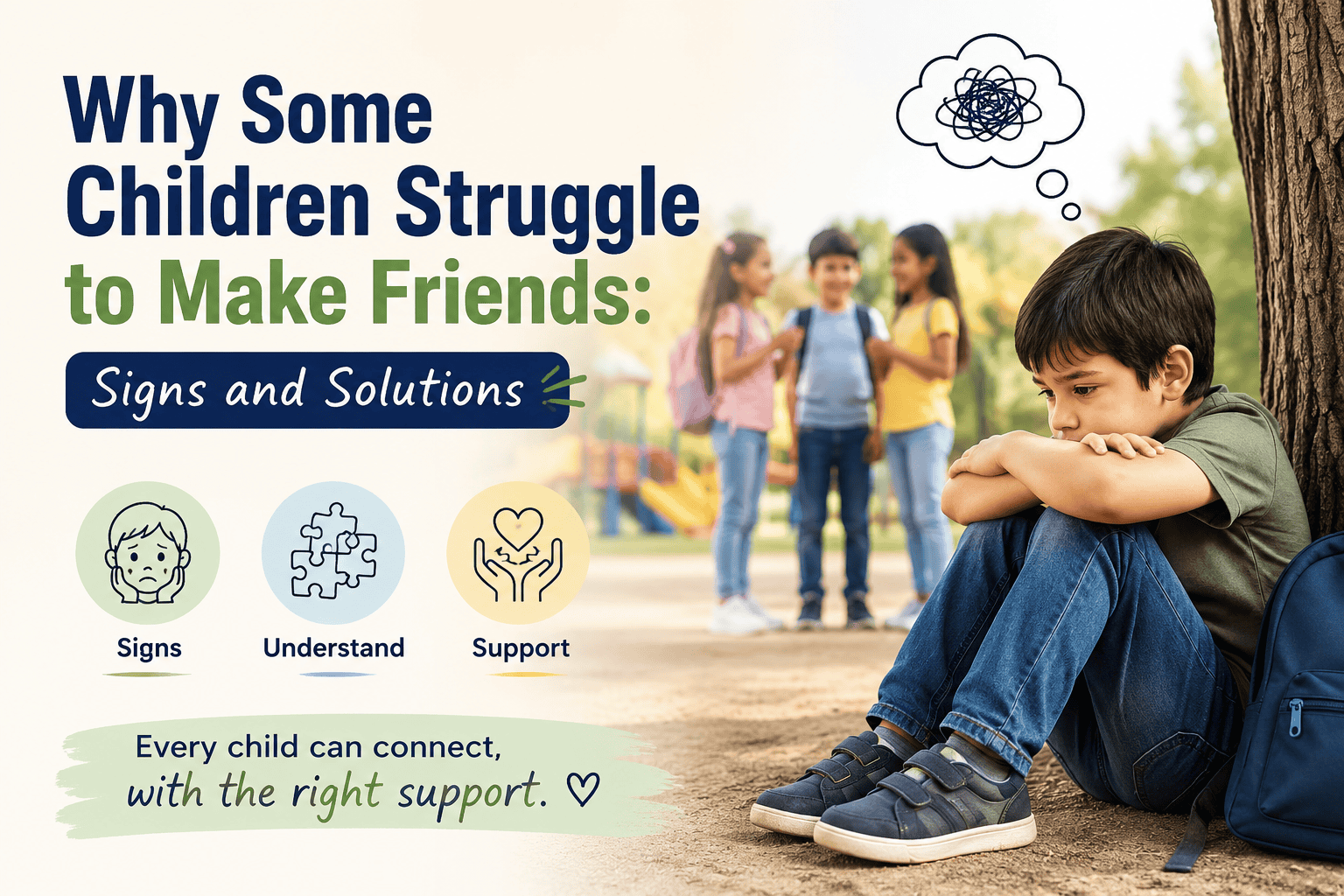
Making friends is an important part of every child’s growth and development. Friendships help children build confidence, learn communication skills, develop empathy, and enjoy school and social activities. However, not every child finds it easy to connect with others.
Some children prefer spending time alone, while others genuinely want friends but struggle to build and maintain relationships. As a parent, it can be difficult to watch your child feel left out or have trouble fitting in. The good news is that with the right guidance and support, children can develop the social skills they need to build meaningful friendships. Families seeking Child Counselling in Ludhiana can benefit from professional support that helps children improve social skills, emotional regulation, and confidence in interacting with others.
In this blog, we’ll explore why some children struggle to make friends, the signs parents should look for, and practical ways to help.
Why Do Some Children Find It Difficult to Make Friends?
Every child is unique, and there isn’t always a single reason behind social difficulties. Several factors can affect a child’s ability to build friendships.
1. Social Skill Challenges
Some children simply haven’t developed the social skills needed to start conversations, share toys, take turns, or understand social cues.
They may:
- Find it difficult to join group activities.
- Interrupt conversations.
- Struggle to understand body language or facial expressions.
- Have trouble keeping a conversation going.
These skills can be learned with practice and guidance.
2. Shyness or Social Anxiety
A naturally shy child may take longer to feel comfortable around new people. Some children also experience social anxiety, making them worry about being judged or rejected.
Signs may include:
- Avoiding group activities.
- Staying close to parents in social settings.
- Speaking very little around unfamiliar people.
- Feeling nervous before school or birthday parties.
3. Communication Difficulties
Children who have speech or language delays may find it harder to express themselves or understand others during conversations.
When communication becomes difficult, children may avoid interacting with peers, leading to fewer opportunities to build friendships.
4. Attention and Behavioral Challenges
Children with ADHD may interrupt others, act impulsively, or struggle to wait for their turn during games. These behaviors can sometimes make social interactions more challenging, even though the child genuinely wants friends.
Similarly, children with emotional or behavioral difficulties may find it hard to manage frustration or cooperate during play.
5. Autism Spectrum Disorder (ASD)
Many children with autism want friendships but may struggle with understanding social rules, reading emotions, or participating in group play.
With the right support, they can learn strategies to build meaningful relationships.
6. Low Self-Confidence
Children who don’t believe in themselves may hesitate to approach others because they fear rejection.
Low confidence often develops after repeated negative social experiences or bullying.
Signs Your Child May Be Struggling Socially
Some children openly express loneliness, while others keep their feelings to themselves.
Watch for signs such as:
- Preferring to play alone all the time.
- Difficulty starting conversations.
- Rarely receiving invitations to playdates or birthday parties.
- Feeling upset after school without explaining why.
- Avoiding group activities.
- Frequently saying, “Nobody wants to play with me.”
- Becoming anxious before social events.
- Having trouble resolving small conflicts with friends.
Occasional loneliness is normal, but if these behaviors continue for several months, it may be worth exploring further.
How Parents Can Help
Encourage Everyday Conversations
Talk with your child regularly about their day.
Ask open-ended questions such as:
- “Who did you play with today?”
- “What was the best part of your day?”
- “Did anything make you feel sad or happy?”
Listening without judgment helps children feel comfortable sharing their experiences.
Teach Social Skills Through Play
Role-playing everyday situations is an excellent way to build confidence.
Practice:
- Greeting someone.
- Introducing themselves.
- Asking another child to play.
- Sharing toys.
- Taking turns.
- Solving disagreements politely.
These small practice sessions prepare children for real-life interactions.
Arrange Small Playdates
Large groups can feel overwhelming.
Instead, invite one child at a time for a short play session. Smaller settings often help children feel more relaxed and confident.
Encourage Group Activities
Activities such as sports, dance, music, art classes, or hobby clubs provide natural opportunities to meet children with similar interests.
Shared activities make conversations easier and friendships more likely.
Build Your Child’s Confidence
Celebrate effort rather than perfection.
Instead of saying:
“You made lots of friends today.”
Try:
“I’m proud of how confidently you introduced yourself.”
Positive encouragement motivates children to keep trying.
Be a Positive Role Model
Children learn by observing adults.
Show kindness, good communication, patience, and respect in your own relationships. These everyday examples teach valuable social skills.
Avoid Comparing Your Child to Others
Every child develops social confidence at their own pace.
Comparing them to siblings or classmates may lower their self-esteem.
Focus on your child’s progress instead of someone else’s achievements.
When Should Parents Seek Professional Help?
Some social challenges improve naturally with time and practice. However, professional support may be helpful if your child:
- Has persistent difficulty making friends.
- Avoids social situations completely.
- Shows delayed speech or language development.
- Has frequent emotional outbursts during play.
- Experiences bullying or extreme anxiety.
- Struggles to understand social interactions despite support.
A child psychologist, speech therapist, occupational therapist, or behavioral therapist can assess your child’s strengths and challenges and recommend strategies tailored to their needs.
Early support often helps children develop stronger communication, emotional regulation, and social confidence.
Final Thoughts
Every child deserves the chance to build meaningful friendships. While some children naturally connect with others, many simply need extra guidance, patience, and encouragement to develop social skills.
As a parent, your support can make a lasting difference. By creating opportunities for social interaction, teaching communication skills, and celebrating small successes, you can help your child build confidence and form healthy, lasting friendships. If you feel your child needs additional support, the experienced professionals at Global Wellness Ludhiana can provide personalized guidance to help them develop essential social and emotional skills.
Remember, making friends is a skill—not a talent. Like any skill, it grows with practice, understanding, and the right support.
Making friends is an important part of every child’s growth and development. Friendships help children build confidence, learn communication skills, develop empathy, and enjoy school and social activities. However, not every child finds it easy to connect with others.
Some children prefer spending time alone, while others genuinely want friends but struggle to build and maintain relationships. As a parent, it can be difficult to watch your child feel left out or have trouble fitting in. The good news is that with the right guidance and support, children can develop the social skills they need to build meaningful friendships. Families seeking Child Counselling in Ludhiana can benefit from professional support that helps children improve social skills, emotional regulation, and confidence in interacting with others.
In this blog, we’ll explore why some children struggle to make friends, the signs parents should look for, and practical ways to help.
Why Do Some Children Find It Difficult to Make Friends?
Every child is unique, and there isn’t always a single reason behind social difficulties. Several factors can affect a child’s ability to build friendships.
1. Social Skill Challenges
Some children simply haven’t developed the social skills needed to start conversations, share toys, take turns, or understand social cues.
They may:
- Find it difficult to join group activities.
- Interrupt conversations.
- Struggle to understand body language or facial expressions.
- Have trouble keeping a conversation going.
These skills can be learned with practice and guidance.
2. Shyness or Social Anxiety
A naturally shy child may take longer to feel comfortable around new people. Some children also experience social anxiety, making them worry about being judged or rejected.
Signs may include:
- Avoiding group activities.
- Staying close to parents in social settings.
- Speaking very little around unfamiliar people.
- Feeling nervous before school or birthday parties.
3. Communication Difficulties
Children who have speech or language delays may find it harder to express themselves or understand others during conversations.
When communication becomes difficult, children may avoid interacting with peers, leading to fewer opportunities to build friendships.
4. Attention and Behavioral Challenges
Children with ADHD may interrupt others, act impulsively, or struggle to wait for their turn during games. These behaviors can sometimes make social interactions more challenging, even though the child genuinely wants friends.
Similarly, children with emotional or behavioral difficulties may find it hard to manage frustration or cooperate during play.
5. Autism Spectrum Disorder (ASD)
Many children with autism want friendships but may struggle with understanding social rules, reading emotions, or participating in group play.
With the right support, they can learn strategies to build meaningful relationships.
6. Low Self-Confidence
Children who don’t believe in themselves may hesitate to approach others because they fear rejection.
Low confidence often develops after repeated negative social experiences or bullying.
Signs Your Child May Be Struggling Socially
Some children openly express loneliness, while others keep their feelings to themselves.
Watch for signs such as:
- Preferring to play alone all the time.
- Difficulty starting conversations.
- Rarely receiving invitations to playdates or birthday parties.
- Feeling upset after school without explaining why.
- Avoiding group activities.
- Frequently saying, “Nobody wants to play with me.”
- Becoming anxious before social events.
- Having trouble resolving small conflicts with friends.
Occasional loneliness is normal, but if these behaviors continue for several months, it may be worth exploring further.
How Parents Can Help
Encourage Everyday Conversations
Talk with your child regularly about their day.
Ask open-ended questions such as:
- “Who did you play with today?”
- “What was the best part of your day?”
- “Did anything make you feel sad or happy?”
Listening without judgment helps children feel comfortable sharing their experiences.
Teach Social Skills Through Play
Role-playing everyday situations is an excellent way to build confidence.
Practice:
- Greeting someone.
- Introducing themselves.
- Asking another child to play.
- Sharing toys.
- Taking turns.
- Solving disagreements politely.
These small practice sessions prepare children for real-life interactions.
Arrange Small Playdates
Large groups can feel overwhelming.
Instead, invite one child at a time for a short play session. Smaller settings often help children feel more relaxed and confident.
Encourage Group Activities
Activities such as sports, dance, music, art classes, or hobby clubs provide natural opportunities to meet children with similar interests.
Shared activities make conversations easier and friendships more likely.
Build Your Child’s Confidence
Celebrate effort rather than perfection.
Instead of saying:
“You made lots of friends today.”
Try:
“I’m proud of how confidently you introduced yourself.”
Positive encouragement motivates children to keep trying.
Be a Positive Role Model
Children learn by observing adults.
Show kindness, good communication, patience, and respect in your own relationships. These everyday examples teach valuable social skills.
Avoid Comparing Your Child to Others
Every child develops social confidence at their own pace.
Comparing them to siblings or classmates may lower their self-esteem.
Focus on your child’s progress instead of someone else’s achievements.
When Should Parents Seek Professional Help?
Some social challenges improve naturally with time and practice. However, professional support may be helpful if your child:
- Has persistent difficulty making friends.
- Avoids social situations completely.
- Shows delayed speech or language development.
- Has frequent emotional outbursts during play.
- Experiences bullying or extreme anxiety.
- Struggles to understand social interactions despite support.
A child psychologist, speech therapist, occupational therapist, or behavioral therapist can assess your child’s strengths and challenges and recommend strategies tailored to their needs.
Early support often helps children develop stronger communication, emotional regulation, and social confidence.
Final Thoughts
Every child deserves the chance to build meaningful friendships. While some children naturally connect with others, many simply need extra guidance, patience, and encouragement to develop social skills.
As a parent, your support can make a lasting difference. By creating opportunities for social interaction, teaching communication skills, and celebrating small successes, you can help your child build confidence and form healthy, lasting friendships. If you feel your child needs additional support, the experienced professionals at Global Wellness Ludhiana can provide personalized guidance to help them develop essential social and emotional skills.
Remember, making friends is a skill—not a talent. Like any skill, it grows with practice, understanding, and the right support.
Frequently Asked Questions (FAQs)
1. Why is my child struggling to make friends?
Children may struggle to make friends for many reasons, including shyness, social anxiety, communication difficulties, low self-confidence, ADHD, autism spectrum disorder (ASD), or limited social experience. Understanding the underlying cause can help parents provide the right support.
2. Is it normal for some children to have difficulty making friends?
Yes. Every child develops social skills at their own pace. Some children are naturally more reserved, while others need extra guidance to build confidence and learn how to interact with peers. However, if social difficulties persist and affect your child’s emotional well-being, professional support may be beneficial.
3. How can parents help a child make friends?
Parents can encourage open communication, teach social skills through role-playing, arrange small playdates, enroll children in group activities, praise their efforts, and model positive social behavior. Consistent encouragement helps children become more confident in social situations.
4. When should I seek Child Counselling in Ludhiana for my child?
You should consider Child Counselling in Ludhiana if your child consistently avoids social situations, has difficulty making or maintaining friendships, experiences bullying, shows excessive social anxiety, or struggles with emotional regulation. Early intervention can help improve social confidence and emotional well-being.
5. Can Child Counselling in Ludhiana improve my child’s social skills?
Yes. Child Counselling in Ludhiana helps children develop important life skills such as effective communication, emotional regulation, problem-solving, self-confidence, and healthy peer interaction. Therapists use age-appropriate techniques to help children build stronger relationships.
6. What are the signs that my child may need professional support?
Some common signs include:
- Preferring to be alone most of the time.
- Difficulty starting or maintaining conversations.
- Frequent conflicts with peers.
- Avoiding school or social events.
- Saying they have no friends.
- Feeling anxious or upset before social activities.
If these behaviors continue for several months, a professional evaluation may be helpful.
7. Can speech or language difficulties affect my child’s ability to make friends?
Yes. Children with speech or language delays may find it difficult to express themselves or understand conversations, making social interactions more challenging. Speech therapy, along with counselling when needed, can improve communication and confidence.
8. Does ADHD or autism make it harder for children to build friendships?
Children with ADHD or Autism Spectrum Disorder (ASD) may face additional social challenges, such as understanding social cues, waiting their turn, or managing emotions. With the right therapies and guidance, they can develop meaningful friendships and improve their social interactions.
9. How long does it take for a child to improve their social skills?
Every child progresses differently depending on their individual needs and the underlying challenges. With consistent parental support, regular practice, and professional intervention when needed, many children show noticeable improvement in their confidence and social skills over time.
10. Where can I find professional Child Counselling in Ludhiana?
If your child is experiencing persistent social, emotional, or behavioral challenges, the experienced team at Global Wellness Ludhiana offers personalized Child Counselling in Ludhiana to help children build confidence, improve communication, and develop healthy, lasting friendships.